Style stories
A Kate Lovejoy Interiors guide to crafting an inviting blue kitchen through intentional design.
Introduction To Blue Kitchen Ideas
When I look back at the kitchens I have designed over the years, one thing stands out. Blue appears again and
again. It shows up in different shades, styles and layouts yet its impact is always steady. Blue kitchens have stayed popular for years and their appeal isn’t fading.
But this post isn’t about pushing you toward blue just because it’s everywhere right now.
It’s about helping you feel confident choosing your colour.
And if it is blue, this guide will help you find the shade that supports the way you want your kitchen to feel.
What colour would you choose if you trusted your instincts a little more?
Why Blue Kitchens Work
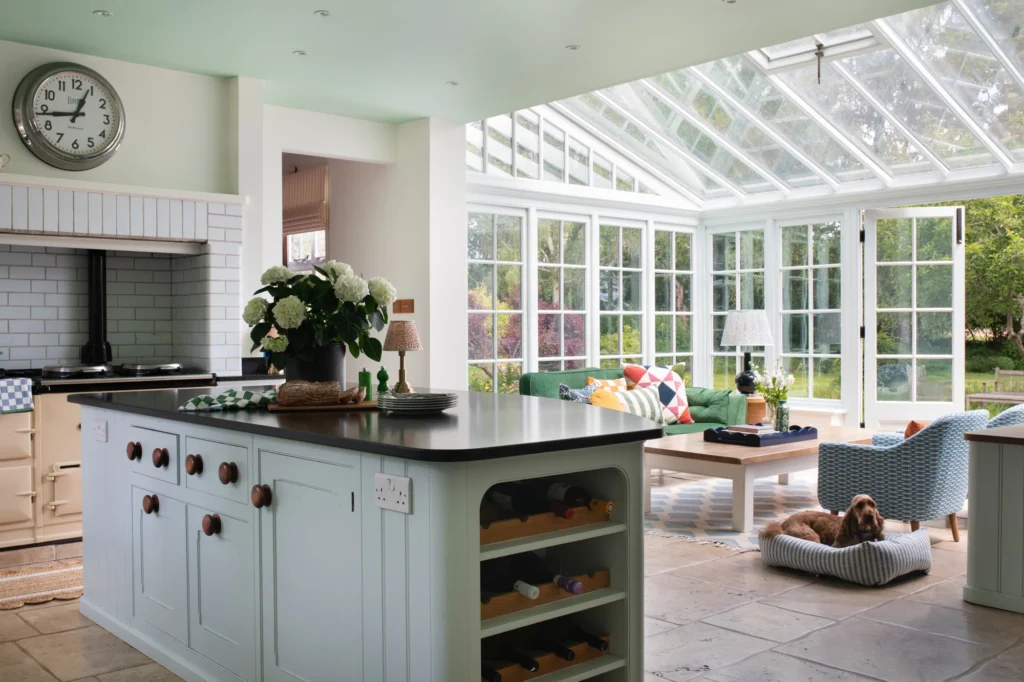
Blue adds calm to a room that carries so much of daily life. Kitchen spaces hold movement, noise, decisions and the small moments that repeat each day. Blue softens that visual noise. It gives the eye a place to rest which helps the room feel more settled.
People often describe blue kitchens as warm, grounded or composed. These descriptions are emotional, and they come up often. Blue has a way of holding the space together, especially in British homes where light changes quickly through grey and bright parts of the day.
Blue also gives character without feeling loud. It offers personality without demanding attention. It feels modern yet safe, familiar yet fresh.
Ask yourself: what do you want the colour of your kitchen to do for you each day?
The Psychology Behind Blue Kitchens
Colour psychology helps explain why blue keeps showing up in so many kitchens, including my own projects. Blue is linked with calm, clarity and steadiness. It brings emotional order to a space that holds tasks, movement and routine.
Here is why this works so well in a kitchen:
• Blue reduces visual stress
• It helps the room feel organised
• It supports focus
• It creates calm without feeling flat
Blue gives emotional space. It does not rush the room. It does not overwhelm it. It makes the room feel easier to live in. It also suits British daylight. Blue holds depth on cloudy days and stays crisp on bright ones. This is one reason clients feel drawn to it, often before they can explain why.
Choosing The Right Shade Of Blue
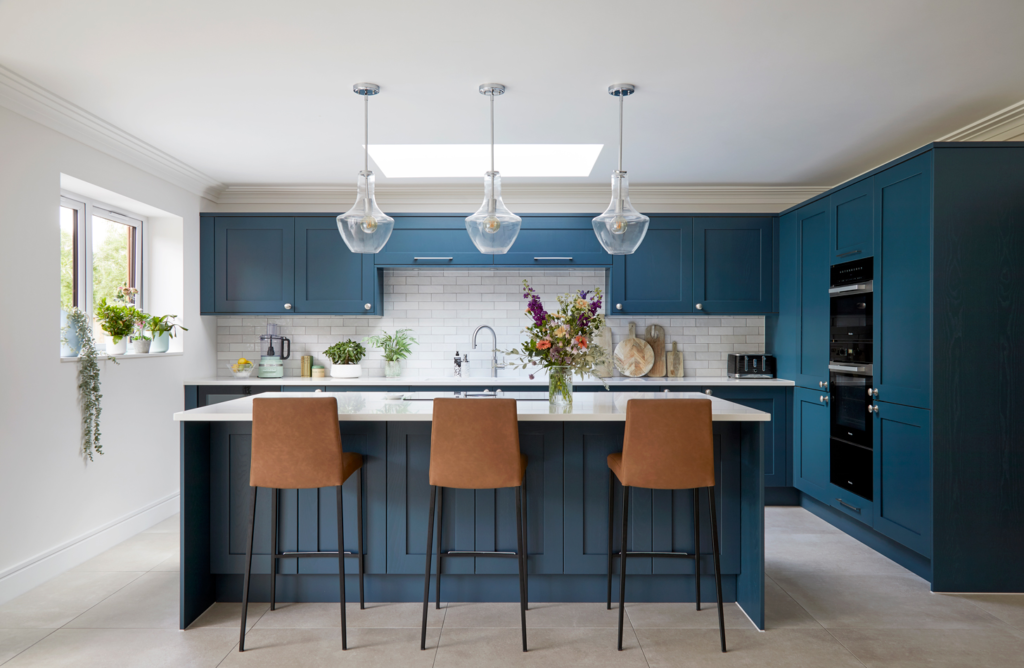
If blue feels right, the next step is choosing the shade that supports your home. Light in the UK shifts throughout the day which means undertones matter.
Think about the direction your kitchen faces:
• North facing kitchens feel cooler
• South facing kitchens are naturally bright
• East facing rooms warm early then cool
• West facing rooms warm later in the day
Warm blues soften cooler rooms. Grey-blues feel modern. Navy adds structure. Green-blues feel natural and
grounded. Soft powder blues bring gentle brightness.
Use large tester patches on different walls. Watch them morning to evening. Notice which shade keeps the feeling you want.
If you want help choosing a palette with confidence, you can explore our Colour and Style Consultation page.
How To Balance Blue With Wood and Materials
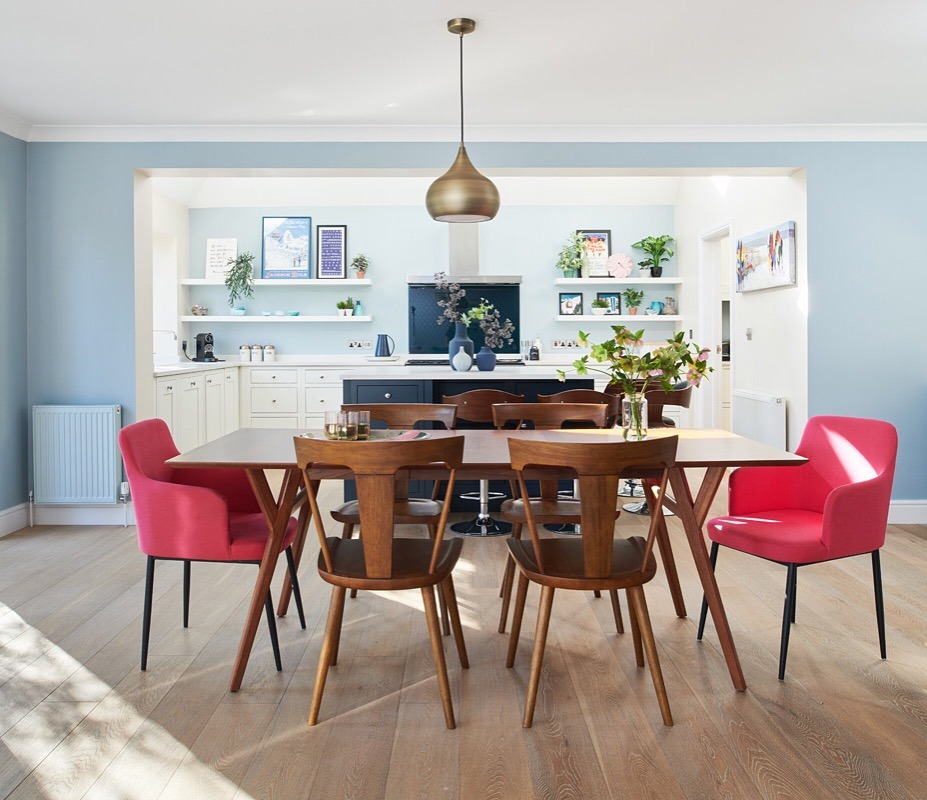
Wood tones are one of the simplest ways to warm a blue kitchen. They break up long runs of cabinetry and make the colour feel more natural and lived in.
Here are easy ways to use wood in a blue kitchen:
• Open shelving – Oak or walnut shelves soften the palette and add gentle texture.
• Stools and seating – Wooden stools or chairs bring warmth and keep the kitchen from feeling too cool.
• Handles and small details – Wooden handles or trims add balance without dominating the design.
• Flooring – Timber flooring grounds the space and prevents dark blues from feeling heavy.
You can also balance blue with other materials:
• Brass or brushed gold add warmth
• Natural stone introduces movement
• Soft lighting adds glow during evening hours
• Simple tiles keep the focus on the colour
Think about how your kitchen feels during real, everyday moments. Does the combination of materials calm the room or demand attention?
Design Tips For Small And Large Kitchens
Small Kitchens
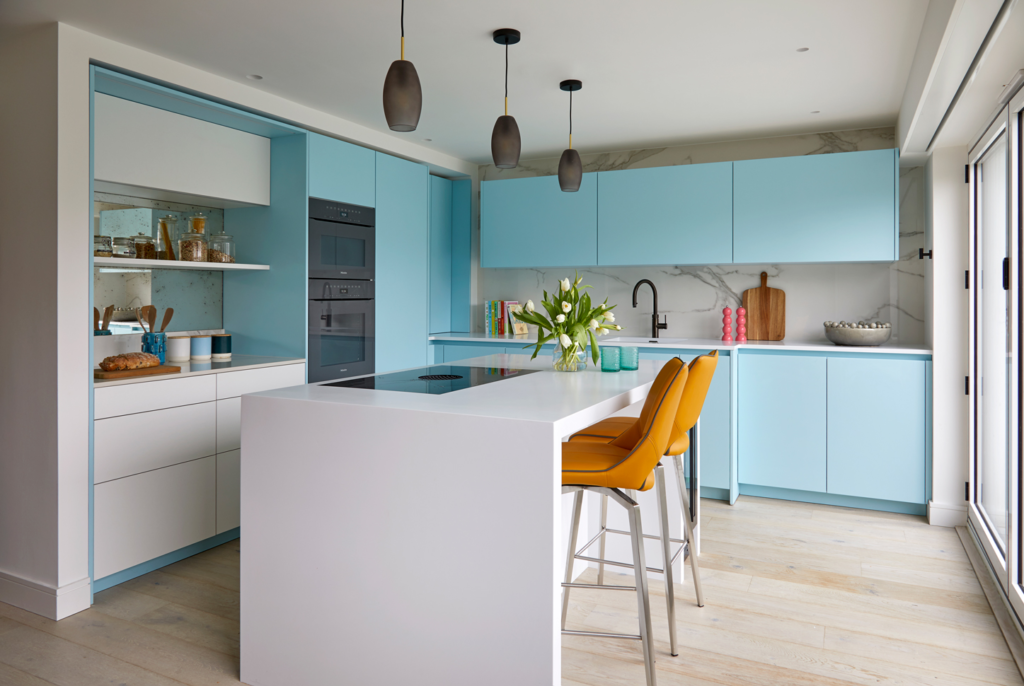
Blue adds depth without shrinking the room. In smaller spaces, clarity matters.
Try:
• Minimal hardware for simplicity
• Medium or deeper blues to anchor the room
• Matching walls and cabinetry for a seamless feel
• Wood accents for warmth
This helps the room feel considered rather than crowded.
Large Kitchens
In bigger spaces, blue adds structure. It can zone an open plan room and bring balance.
Consider:
• Navy on an island for a strong focal point
• Soft blue on tall units to soften height
• Blue tiles as a quiet feature
• Wood tones to connect the kitchen with the rest of the home
Blue anchors the room without needing additional architectural changes.
What part of your kitchen do you want the eye to rest on?
Additional Insights
Here are a few thoughts to support your decision:
Blue ages well
It feels classic and modern which helps it stay relevant for years.
Blue suits real homes
Fingerprints and splashes show less than on white cabinetry.
Blue adapts easily
It works with wood, stone, metal and textured accessories.
Blue allows personal style
It supports both bold and simple interiors.
If you are planning a renovation or layout change, our Feasibility and Space Planning Consultation page can help you plan with clarity.
Ready To Take The Next Steps?
If you’re dreaming of a warm, balanced blue kitchen but want clarity on how to make it work for your home, start with a Colour & Style Consultation. We can help you explore layout, finishes, and style so your space feels cohesive and intentional.
if you’re not quite there yet, visit Before You Build or book a Feasibility and Space Planning Consultation.
Curious if Kate Lovejoy is the right interior designer for your home? Discover more in our interview with the Society of British and International Interior Design here.