Kate Lovejoy Interiors on AI images in early design meetings and what keeping the thinking open means for homeowners planning a renovation
Introduction to AI Interior Design Images: A Useful Start, Handled With Care
More and more clients are bringing AI interior design images to our first meeting. We sit down at the kitchen table, talk through the house, and then a phone comes out. “We’ve been playing around with this,” my client says, and turns the screen towards me.
On it is their living room, reimagined. Deep green walls. A curved sofa. Oak panelling they spotted in a magazine, layered onto their own space. They’re a little hesitant, a little excited, and keen to know what I think.
So here is what I think. It’s a genuinely useful moment. It’s also one worth handling with care.
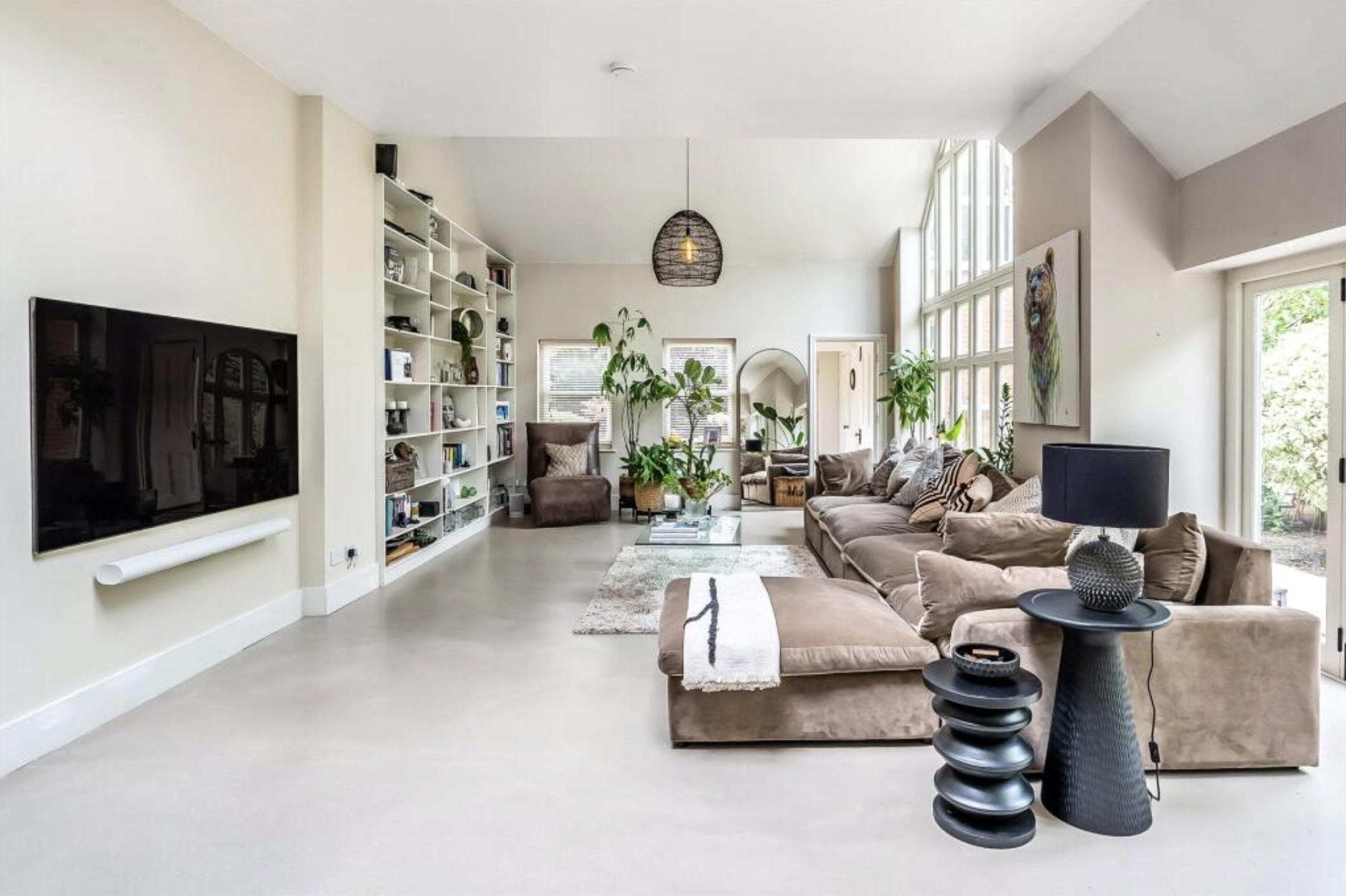
The Horsell Project: Before
Every great interior starts with understanding the space you already have. This is where The Horsell Project began, an existing room ready to be reimagined.
Why AI Images Are a Good Sign at the Start of a Project
Using AI interior design images tells me you’re engaged. You’ve been thinking about your home, imagining what it could be, and letting yourself get excited about it. That energy matters. Renovations are long, and the clients who enjoy the process are usually the ones who feel invested from the start.
It also tells me something about how you see our work together. Nobody arrives with one of these saying, “Please make exactly this.” What you’re really saying is, “Here’s where our heads are.” That’s an honest and helpful place to begin.
It also opens a conversation that might otherwise take longer to reach. Plenty of people find it hard to describe what they want in words. A picture, even an imperfect one, gives us something to react to together. I often learn as much from what you changed in the image, or what you tried and rejected, as from the final version on the screen.
Using AI Interior Design Images for a DIY Project
If you’re planning to take on a room yourself, AI is a fantastic place to start. You can try a darker wall colour, swap the flooring or test a completely different mood in minutes. You can explore freely, see what excites you and rule things out before spending anything.
For a DIY project, that’s real value. It lowers the cost of a bad idea to almost nothing, and it helps you find the confidence to commit to a good one. A quick render might be all you need to realise the bold paint you were nervous about is exactly right, or that the patterned tile you loved in the shop would overwhelm a small hallway.
It’s a different conversation when you’re bringing in a designer. Then the most useful thing isn’t a finished picture. It’s the thinking behind it.
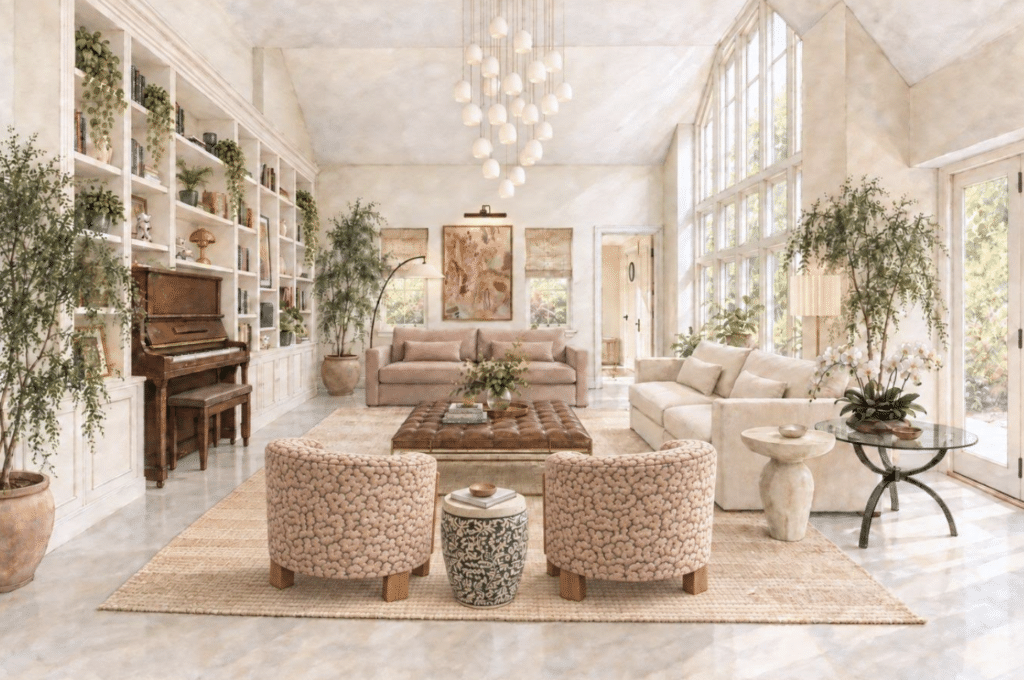
The Horsell Project: Our Prompt
AI can be a powerful tool for exploring ideas and visualising possibilities. Here, we used a carefully considered prompt to experiment with the direction, mood and materials.
When the Picture Arrives Before the Thinking
Once an image exists, it’s very hard to unsee. It quietly becomes the story everyone designs towards, and that includes me. Before we’ve talked about light, or budget, or how you spend a Sunday morning, there’s already a picture on the table setting the direction.
That image was put together in seconds. Often it’s a look from a magazine laid over your room. It doesn’t know the proportions of the space, which way it faces, or what’s behind the walls. It can’t weigh up materials, lead times, regulations or the trades who’ll build it. Most of all, it doesn’t know you.
The risk isn’t that the picture is wrong. It may be lovely. The risk is that it narrows the options before anyone has had the chance to think freely. The early stage of a project is where the most interesting ideas live, and I’d rather we kept that space open a little longer.
What AI Interior Design Images Can’t Tell You About Your Home
It helps to be specific about what sits outside the frame.
Light comes first. A deep green that looks rich and enveloping in a render can feel heavy in a north-facing room on a grey January afternoon. The same colour in a south-facing room might glow. An AI image shows one moment, lit perfectly. Your home has to work at seven in the morning and at the end of a long day.
Then there’s scale. That curved sofa may look effortless on screen, but will it leave room to walk past the fireplace? Does it work with where the radiators sit, or the door that swings into the room? These are the details that decide whether a space feels settled or slightly awkward every single day.
And then there’s everything behind the surface. In period properties especially, walls are rarely straight, floors are rarely level and panelling has to be made to fit what’s actually there. Good design accounts for all of this before anything is ordered. It’s the part no image can show, and it’s often where the real value of working with an interior designer lies.
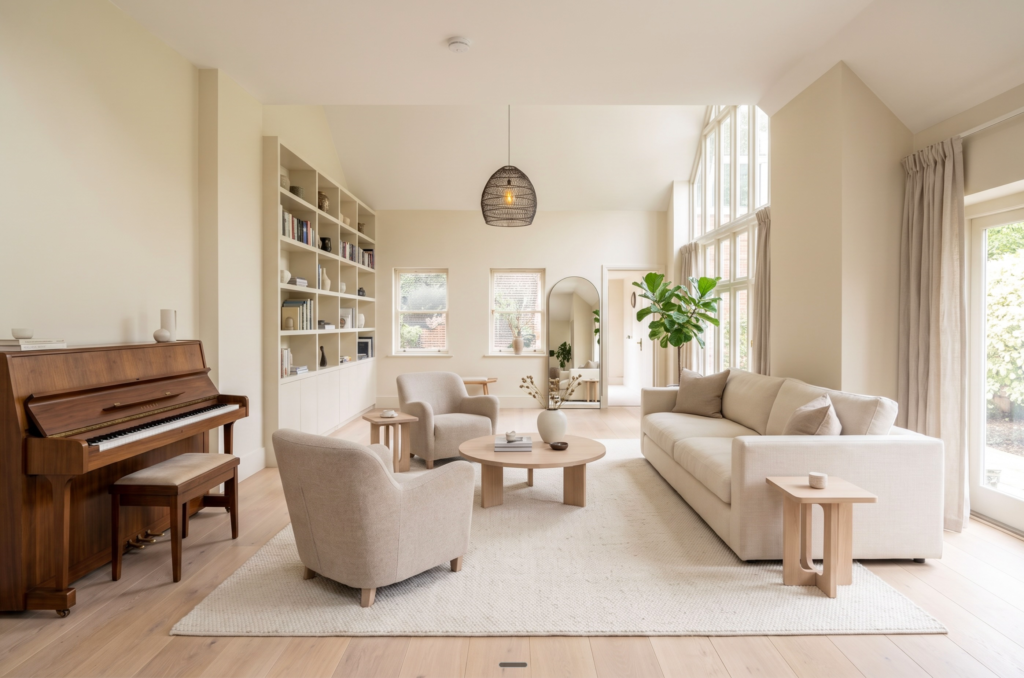
The Horsell Project: AI-Generated Concept
An initial AI-generated visualisation, created from a simple prompt. While it offers a glimpse of what the space could look like, it’s missing the considered details, thoughtful material choices and cohesive design direction that come from a professional interior design process.
What to Bring to Your First Design Meeting
Please do bring your AI images. Just bring a little more with them.
Tell me what you love about the image. Is it the colour, the calm, the sense of space, the way the light falls? That’s the useful information, and it often matters more than the picture itself.
Bring several references, not one. A handful of images, from anywhere, stops any single picture from taking over.
Tell me what isn’t working now. The room that feels dark, the kitchen everyone avoids, the hallway where the shoes pile up.
Describe how you want it to feel. Settled, energised, cosy, open. Feelings are a better starting point than finishes.
Talk to me about how you actually live. Who uses the space, when, and for what. This is where good design really begins.
Leave room to be surprised. Some of the best rooms I’ve designed started somewhere my clients would never have pictured.
Early Thinking, Not the Interior Design Brief
AI is a wonderful tool, and I use it in my own work. It helps us explore, move faster and make ideas tangible. But a render is a starting point, not a design. The value of working with a designer sits in the judgement applied afterwards: to your house, your budget, and the way you want to live in it.
There’s a wider conversation happening across the industry about this too, including how clearly we separate concept imagery from finished, built work. DesignDash explores it well here. For me, the answer is simple. Images are a way of thinking out loud. The design comes from what we do with them.
If colour and atmosphere are where your thinking has started, a Colour and Style Consultation is a natural next step. We take what drew you to those images and translate it into a palette and materials that work in your actual rooms, in your actual light.
If you’re earlier still, and wondering whether a new layout or extension could work, a Feasibility and Space Planning Consultation gives you clarity before any picture starts setting the direction. And if you’re planning a larger renovation, Before You Build explains how early design thinking sits alongside your architect and builder.
Ready to Take the Next Step?
So bring the pictures. Let’s treat them as early thinking, and then look beyond them together.
If you’re at the beginning of a project and would like to talk it through, get in touch. It’s never too early to start the conversation.
Curious whether Kate Lovejoy Interiors is the right fit for your home? Discover more in our interview with the Society of British and International Interior Design.