Kate Lovejoy Interiors on where your renovation budget will actually be felt and what spending with intention means for the home you end up with.
Introduction to Renovation Priorities: A Room-by-Room Guide to Spending Well
Most people approach a renovation the same way. They write down everything they want to change, add it all up, and feel quietly sick.
The number is always too high. So they start cutting. And often, they cut the wrong things.
Knowing where to invest in a renovation, and where you can genuinely spend less without settling, is one of the most useful things an interior designer can help you with. It is not about having the biggest budget. It is about placing that budget where it will be felt most.
After working with clients across whole-house projects for over fifteen years, I have a fairly clear view on this. Some rooms reward investment in ways that change how you live. Others are more forgiving. Here is how I think about it, room by room.
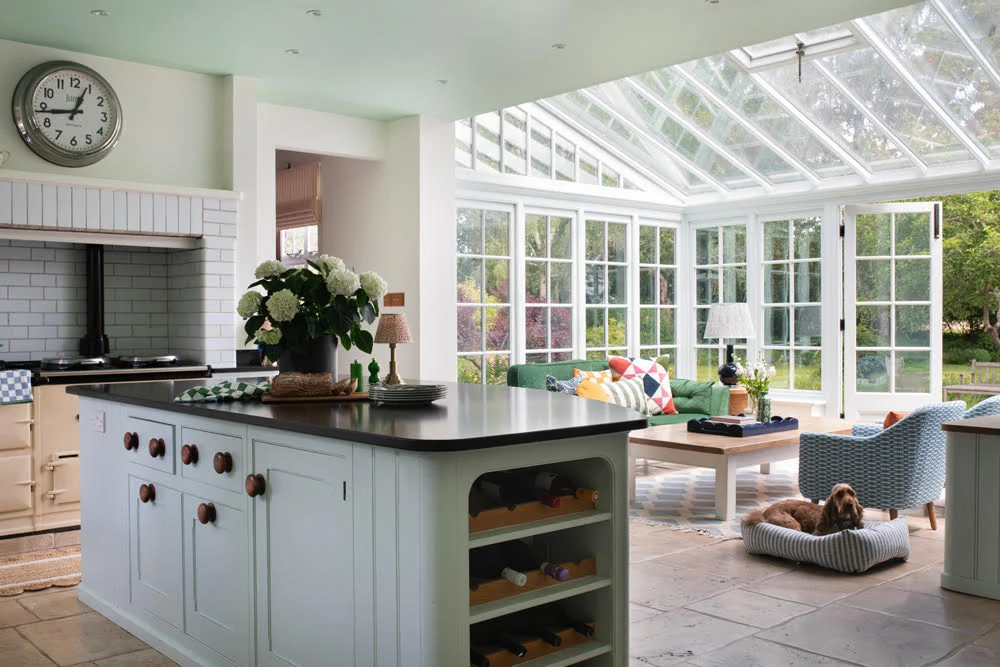
The Kitchen: Invest in Structure, Save on the Surface
There can be tens of thousands of pounds difference between a mid-range kitchen and a top designer or fully bespoke one. And at the end of the day, they all function the same.
That is not me saying spend as little as possible. It is me saying: be clear-eyed about what you are buying.
Showrooms are cleverly designed spaces. You walk in, you see yourself there. The lighting is considered, everything is beautifully staged, and before long you are imagining your life inside a kitchen that costs three times your original budget. That is not an accident. It is a very effective way of making a high price tag feel reasonable.
We have worked on kitchens across the full spectrum, from mid-range through to top designer ranges and fully bespoke joinery. What I would say is this: there are ways of achieving a designer feel without spending at the very top of the market. That is often where a designer’s eye makes the biggest difference. Not in choosing the kitchen itself, but in how it is configured, styled and finished.
Many clients come to me having already chosen their kitchen, and that is absolutely fine. But if you have not committed yet, this is one of the places where your choices will have real consequences for the rest of your budget.
The layout, the storage, the workflow: these are where the investment matters most. The handles and the pendant lighting can evolve. They do not need to be resolved at the same time or at the same cost.
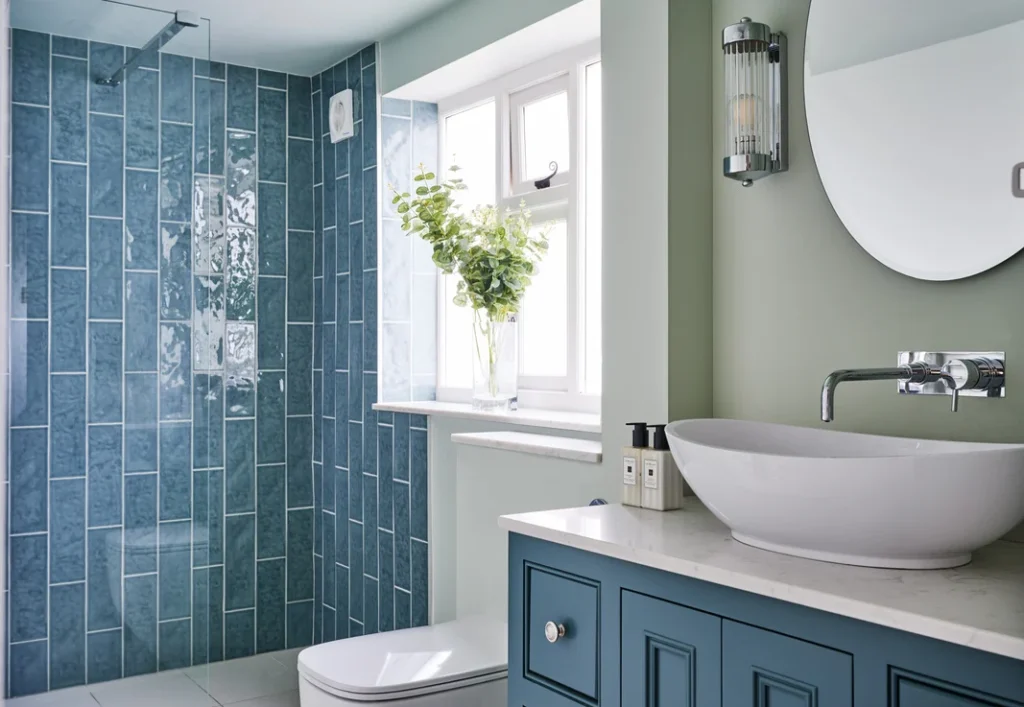
The Bathroom: Where Quality Genuinely Shows
Bathrooms reward considered investment more visibly than almost any other room. The quality of the sanitaryware, the weight of a tap, the finish on a shower fitting: these are things you interact with every single day, and the difference between something well made and something that is not is felt immediately.
For a principal en suite, I would always encourage spending properly on fixtures. Well-made sanitaryware and brassware holds its look and its function over time. A beautifully designed bathroom does not date in the way a kitchen trend might, and the investment reflects that.
Family bathrooms and cloakrooms are a different conversation. Here, robustness matters as much as aesthetics. The focus shifts toward surfaces and layouts that can handle daily use across a household, with design doing the heavy lifting rather than premium fittings throughout. A cloakroom in particular is a wonderful opportunity to do something characterful and unexpected with wallpaper or a statement basin, without the budget of a full bathroom project.
I would spend at mid-range rather than cheap on a bathroom, and not look back.
Tiles are one area where you have real flexibility across all bathroom types. The feel of a bathroom is driven far more by layout, proportion and how the space is designed than by the cost of the tile itself. Some of the most beautiful bathrooms I have worked on have used simpler tiles, chosen with a very clear eye for scale and format, alongside fixtures that were genuinely worth the investment.
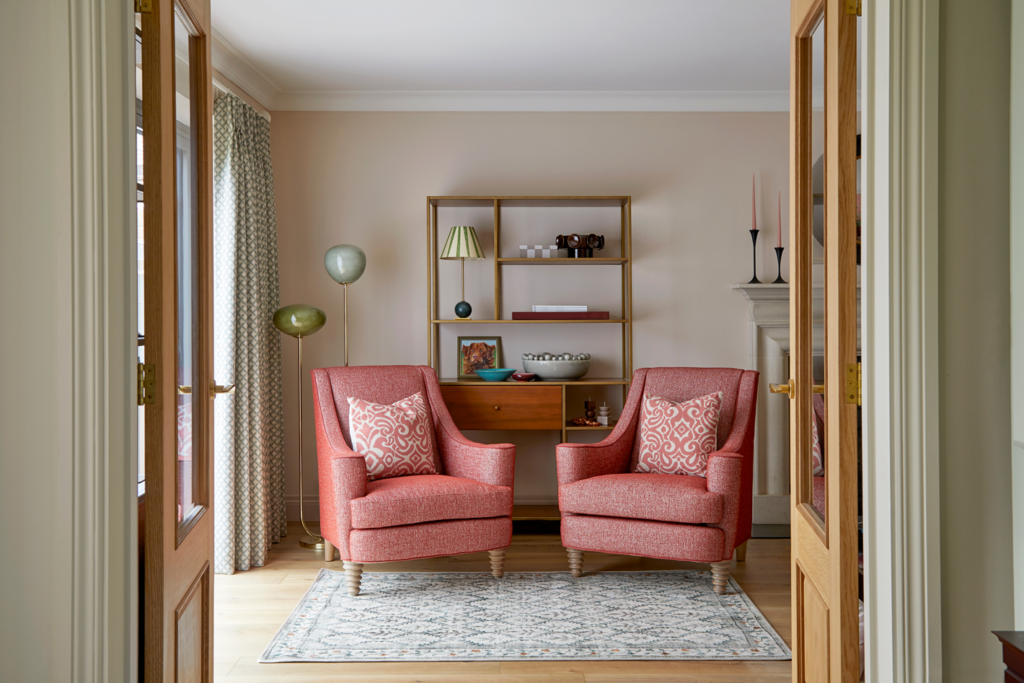
The Living Room: Invest in the Sofa and Lighting, Save Almost Everywhere Else
Invest in your furniture, specifically anything you are going to sit on every single day. I have seen a lot of sofa regret over the years. A sofa that is never quite comfortable enough becomes a small daily frustration that compounds. It is worth buying for longevity.
There are excellent options across a wide price range, including sustainable makers whose products hold up well over time. We touched on this in an earlier post on non-toxic interiors, worth a read if the sourcing question matters to you.
On lighting: beautiful high-end lighting looks beautiful. But the high street offers more than people expect, and some well-chosen, accessible pieces can work brilliantly. Where cheaper lighting tends to show its price is in the details: visible fixings, slightly imprecise finishes, the small things that give a fitting away at close range. That is the finesse you are paying for with a more expensive piece. If you have budget for one or two considered choices here, use it. If not, do not dismiss what is more affordable.
Rugs are worth thinking carefully about. A good rug can lead a whole room. A vintage piece especially can become the foundation that everything else builds around. For families with young children or animals, think practically. Unless you are buying a silk rug or you know it will be treated with care, the question of how you actually live is more useful than the question of how much to spend.
Soft furnishings are the most flexible category in the room. Beautiful fabrics come at a price, but you can mix and match confidently across different price points. One small note: a feather inner will make even an inexpensive cushion cover look and feel considerably better than it has any right to.
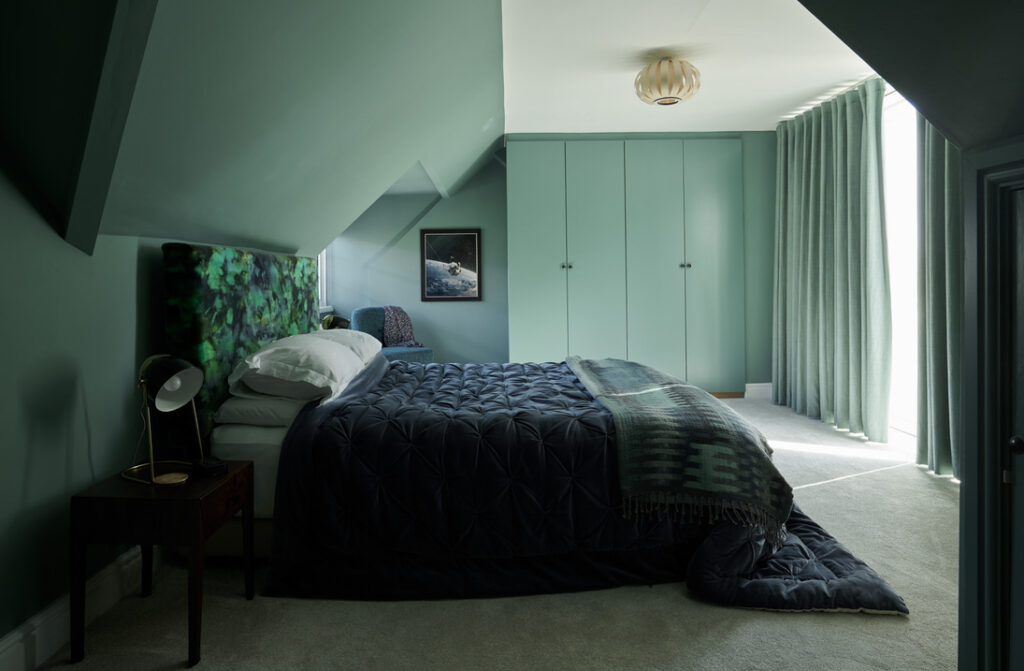
The Primary Bedroom: Invest in Comfort and Calm
A good mattress is non-negotiable. You spend a third of your life on it, and the quality of your sleep is not a place to save money. Beyond that, bedding quality, natural fibres especially, adds a great deal to how a bedroom feels. The difference between cotton and linen is felt every morning.
Lighting can do a great deal here. A beautiful pair of bedside lights can make a bedroom feel genuinely considered. The same principle applies as in the living room: you do not need everything to be at the highest price point. If you are going to invest in one thing, whether that is an upholstered headboard, a special piece of lighting, or well-made window dressings, do that well and let the rest be simpler.
A room with one very considered element and some quieter choices around it will always feel more resolved than a room where everything has been bought at the same mid-point.
Children’s Rooms and Secondary Bedrooms: Save Now, Invest When It Matters
Children grow faster than most fitted furniture was designed for. I have seen beautifully installed children’s rooms that no longer suited the child within five years. If you are going to invest in storage, build in as much flexibility and future-proofing as the space allows.
Paint and wallpaper are relatively easy and inexpensive to change as tastes evolve. I would concentrate spend here, if anywhere, on a bed that will last. A small bed will need to become a larger one, and in my experience, most children from early teenage years consider a double bed the height of luxury.
This is a room where considered choices at a sensible budget will serve you just as well as spending at the top end. The goal is a space that feels personal and cared for, not one that costs as much as the primary bedroom.
The Home Office or Garden Room: Invest in Getting It Right
This category has grown considerably over the past few years, and it is worth treating seriously. A home office or garden room that genuinely works is not a luxury. It is a room that earns its cost every day.
The investment here is less about surfaces and more about structure: insulation, acoustics, light and ventilation. A garden room with poor insulation will be unusable three months of the year. A home office with the wrong acoustic treatment will make video calls feel exhausting. These are not decorative decisions. They are functional ones, and cutting corners on them tends to mean doing it again properly at greater expense later.
Where you can be more relaxed is on the finish. A considered, calm aesthetic does not require expensive materials. It requires good proportions, thoughtful storage and lighting that supports how you actually work. We have designed home offices that feel genuinely beautiful without a high finish budget, because the investment went into the right places first.
If you are considering a garden room or studio, early thinking on how the space connects to the rest of the house and garden matters as much as the room itself. A well-integrated addition feels settled and intentional. One that was not planned that way rarely does.
Hallways and Landings: The Rooms People Most Often Underestimate
Your hallway is the first thing you see when you come home, and the first thing a visitor experiences. I would gently push back on treating it as an afterthought.
A well-chosen floor, a beautiful tile for example, immediately elevates that impression in a way that is hard to achieve any other way. Good flooring in a hallway is a thoroughfare investment: it absorbs daily use and sets the tone for everything that follows. It is worth spending here.
Good functional lighting and considered storage will be used and appreciated every single day. The hallway is not a decorative space. It is a working one, and investing in how it functions tends to pay off more consistently than almost anywhere else in the house. One strong decision, done well, is usually enough.
A Note on Knowing Your Numbers
All of this is easier to navigate when you have a clear picture of your overall budget and where the pressure points are. The most expensive mistakes in a renovation rarely come from overspending in one room. They come from not having a realistic sense of what things actually cost before you commit, which means either under-investing where it matters, or running out of room later.
To help with exactly this, I have been working on a budget calculator for clients: a practical tool designed to give you a realistic picture of what different rooms and decisions actually cost, before you commit to anything.
If you are in the early stages of planning and want some clarity before decisions are made, a
Feasibility and Space Planning Consultation is a good place to begin. We can look at your spaces, your priorities, and where your budget will have the most impact. And if colour and atmosphere are where you want to focus, the Colour and Style Consultation is a considered starting point for understanding what a room needs before you spend anything. And if you would like to talk through how any of this applies to your home, get in touch to arrange a conversation.
Curious whether Kate Lovejoy Interiors is the right fit for your home? Discover more in our interview with the Society of British and International Interior Design.