Style stories
Kate Lovejoy Interiors on designing for two people and why it starts long before the sofa conversation.
Introduction: Designing a Home for Two
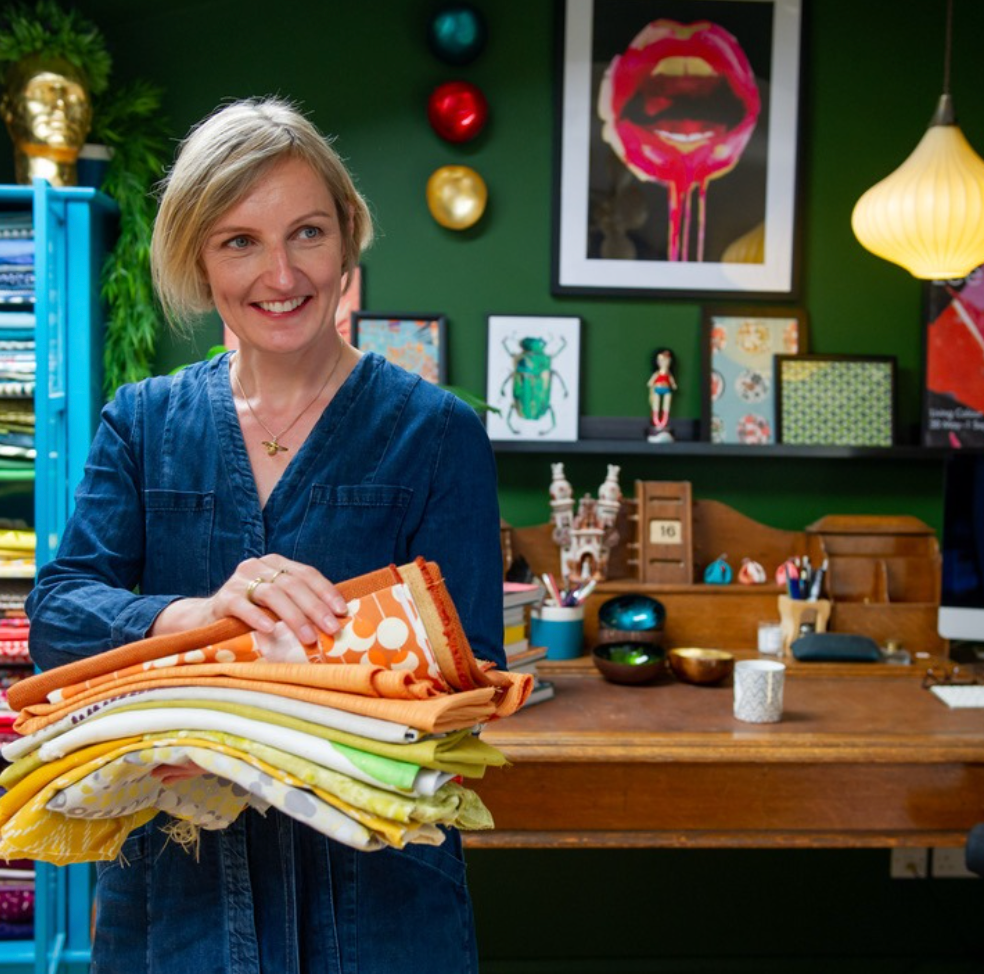
I cleared out my fabric cupboard recently.
It was immaculate, actually. Glass doors. Organised by colour, by pattern. Always visible from across the room. A whole world of possibility, perfectly ordered and waiting.
It’s gone now.
We needed the space. And I wanted to do something with it that mattered, to create a place for my partner to play his music. Because music and sound are to him what fabric and colour are to me. His records hold the same weight my swatches once did. The same sense of possibility. The same quiet attachment to something that isn’t really about the thing at all.
I didn’t fully understand that until I was clearing the shelves.
Designing for two people isn’t just a practical challenge. It’s an emotional one. And it’s one I return to again and again in my own home and in the homes of almost every couple I work with.
Two People, One Home And Why It Gets Complicated
When you share a home with someone, the design conversation gets more interesting and more complicated.
It’s not just about agreeing on a sofa. It’s about two people, often with very different relationships to objects, space, light and atmosphere, trying to build somewhere that holds them both.
I see this pattern repeatedly. One person wants calm and order. The other needs texture and warmth. One is energised by colour. The other finds it exhausting. One wants to display everything that matters to them. The other wants surfaces clear.
Neither is wrong.
But a home that only answers one of them will always feel slightly off for the other. There will be a low-level friction… nothing dramatic, just a persistent sense that the space is working for someone, but not quite for you.
Designing for two people means holding both sets of requirements at the same time, from the very beginning of the process.
Finding the Thread Beneath the Preference
Early in a project, I spend time understanding what each person actually needs a home to do.
Not at the level of “I like modern” or “I want it to feel cosy.” Those words mean different things to different people and they don’t give me enough to work with.
What I’m looking for is the thread underneath. The specific, personal thing.
For one client it was a kitchen table big enough to seat twelve, not because they entertained often, but because Sunday lunches with the extended family were the thing that made the house feel alive. For another it was a reading chair in a particular corner, in a particular light. For someone else it was a wall for their art. Not statement art. Their art. The pieces they had collected slowly over twenty years that told the story of who they were.
These things aren’t decorative requests. They’re emotional requirements. And once I understand them, everything else – the layout, the palette, the materials – can be shaped around them.
This is why designing for two people works best when it starts not with a mood board, but with a conversation. What do you need this home to do for you? Not aesthetically. Actually. The answers are almost always different for each person and almost always more revealing than either of them expects.
The Before You Build process is designed to surface exactly this, before a single structural decision is made.
What Happens When a Home Only Answers One of You
When a home doesn’t hold what matters to the people in it, something subtle goes wrong.
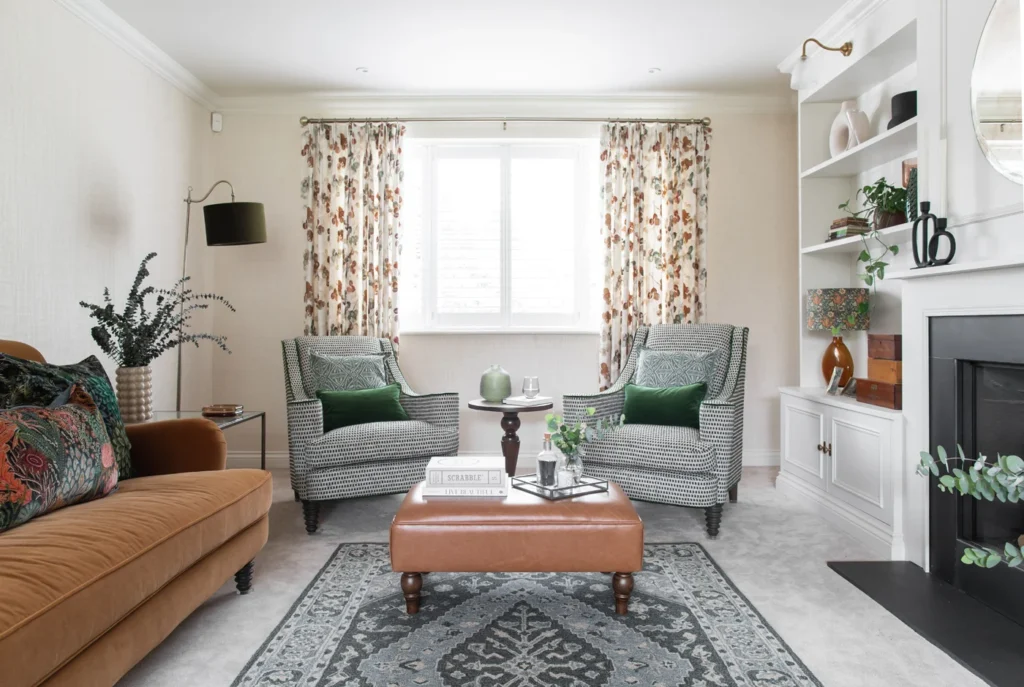
The space might look right. It might even photograph well. But it doesn’t feel right to live in. There’s a low-level friction that’s hard to name, a sense that the house is for someone else.
I’ve walked into rooms like this. You can feel it immediately.
The design has answered the question of how it looks, but not the question of who lives there.
Research in environmental psychology bears this out. The way a space is arranged genuinely shapes mood, behaviour and connection. A room that contradicts how you naturally live creates a cognitive drag, something you adapt around rather than settle into.
Understanding this is one of the most important (and most overlooked) parts of the design process. A home that works for one person and tolerated by the other isn’t a shared home. It’s a compromise with good lighting.
I wrote more about how atmosphere and arrangement shape the way we feel day to day in this piece on analogue rooms and slower living – the same principles apply here.
Making Space for Both: What This Looks Like in Practice
My fabric cupboard is gone. But what replaced it matters.
There’s a corner now where the music lives. A space that holds something my partner needs in the way I needed those fabrics to be visible, accessible, always ready. Not used every day. Just present.
That’s what designing for two people actually looks like when it works. Not equal square footage. Equal intention.
In practice, this often means:
- Naming what each person actually needs: not just what they prefer aesthetically, but what the home must hold for them to feel at ease in it
- Looking for the reason behind the request: the Sunday lunches, the reading chair, the records. The thing behind the thing.
- Designing so that both sets of requirements are addressed early: before the layout is fixed and the decisions are harder to change
- Accepting that the best outcome often looks nothing like either person’s original idea: and feels more like them than anything they had imagined
This is where early thinking makes the most difference. When both perspectives are understood before anything is decided, the home that emerges is genuinely shared, not a compromise arrived at reluctantly, but something that holds you both properly.
The Conversation That Has Nothing to Do With Interiors
Finding out what each person truly needs, not their preferences, but their requirements, is one of the most interesting parts of my work.
It always starts with a conversation that has nothing to do with interiors.
What do you miss doing at home? Where in the house do you feel most like yourself? What would you never want to give up?
Those answers don’t just inform the design. They become the brief.
And designing for two people means doing this work for both partners. With equal attention, equal curiosity, and no assumption that one person’s needs are the default.
Sometimes those needs sit comfortably alongside each other. Sometimes they’re in tension. That tension is rarely about taste. It’s almost always about something more fundamental – the need for quiet, or company. For order, or warmth. For things to be visible, or put away.
A designer’s job is not to decide which person wins. It’s to find the layout, the design and the atmosphere where neither of them has to.
Ready to Find a Home That Holds You Both?
If you’re renovating with a partner and finding it hard to get on the same page, that’s usually where I start too.
A Feasibility and Space Planning Consultation is a useful place to begin. Two hours to work through the layout, the brief and what each of you actually needs from the space. You’ll leave with a clear direction and a written summary to guide what comes next.
Or if you’d like to explore working together on a larger project, get in touch to arrange a conversation. Designing for two people is rarely straightforward, but it is some of the most rewarding work I do.
Curious whether Kate Lovejoy Interiors is the right fit for your home? Read more in our interview with the Society of British and International Interior Design.