Kate Lovejoy Interiors on what’s quietly living inside your sofa and what a recent regulatory shift means for homeowners who care about how they live.
Introduction to Toxic Chemicals In Furniture: A Hidden Health Risk in the Home
A few weeks ago, a story broke that caught a lot of people’s attention.
The Telegraph reported that ministers have confirmed the UK government is finally overhauling fire safety rules that have, for nearly 40 years, effectively required British sofas to be packed with chemical flame retardants. Rules so strict, and so unlike those in any other country, that up to a fifth of the foam inside a typical UK sofa may contain a chemical the World Health Organisation now classifies as “probably carcinogenic to humans.”
For many people, that was news. The sofa. The thing you sit on every evening. The surface your children press their faces into.
This is not cause for alarm, but it is worth understanding. The science has been building for years, and the regulatory shift now underway reflects that. For anyone who thinks carefully about how their home functions, not just how it looks, it is a conversation worth having.
Why UK Sofas Are Different From the Rest of the World
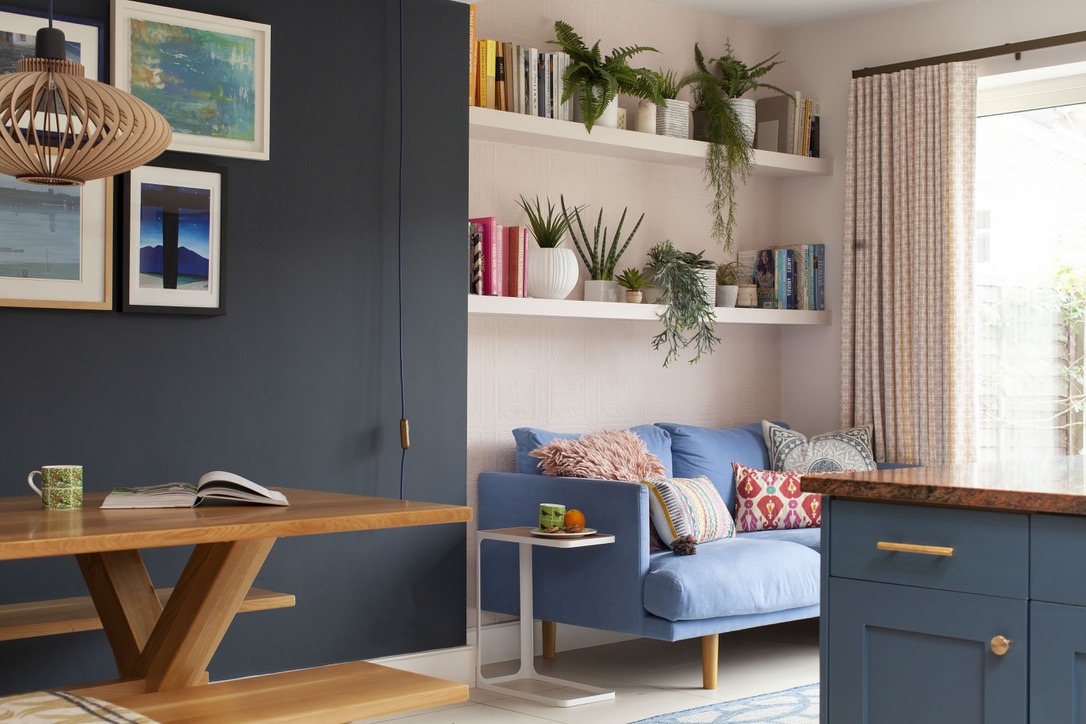
Fire safety regulations introduced in 1988 required upholstered furniture to resist an open flame, a test that proved near-impossible to pass without heavy use of chemical flame retardants. The EU took a different approach. The United States stopped mandating flame retardants in furniture from 2013. Britain and Ireland continued.
The practical result is that IKEA, the world’s largest furniture company, has been producing two versions of many of its sofas: one for the UK and Ireland containing flame retardants, and one for the rest of the world without them. Same design, same fabric. A different chemical composition depending on where it is sold. It is a detail that has quietly focused minds within the industry for some time.
What the Research Shows
The most common flame retardant currently used in UK sofas is TCPP, recently classified by the World Health Organisation as probably carcinogenic to humans. Beyond cancer risk, peer-reviewed research has linked these chemicals to disrupted thyroid and sex hormones, impaired fertility, birth defects, reduced IQ and attention problems in children, immune interference, and damage to the kidney, liver, hearing, cornea and nerves.
What the research also shows is where these chemicals end up. They do not stay locked inside the foam. They escape into household dust, where they are inhaled or ingested over time. Research suggests young children are particularly vulnerable due to their closer contact with floors and soft furnishings where dust accumulates.
A 2019 House of Commons Environmental Audit Committee report raised these concerns formally, noting that UK mothers had some of the world’s highest concentrations of flame retardant chemicals in their breast milk, and calling on the government to act.
There is one further point worth noting. Research has shown that these chemicals not only affect household dust but also make fire smoke more toxic, releasing higher levels of carbon monoxide and hydrogen cyanide. It is a detail that has led researchers to question whether the chemicals are delivering the fire safety benefit they were designed to provide.
What Is Changing and When
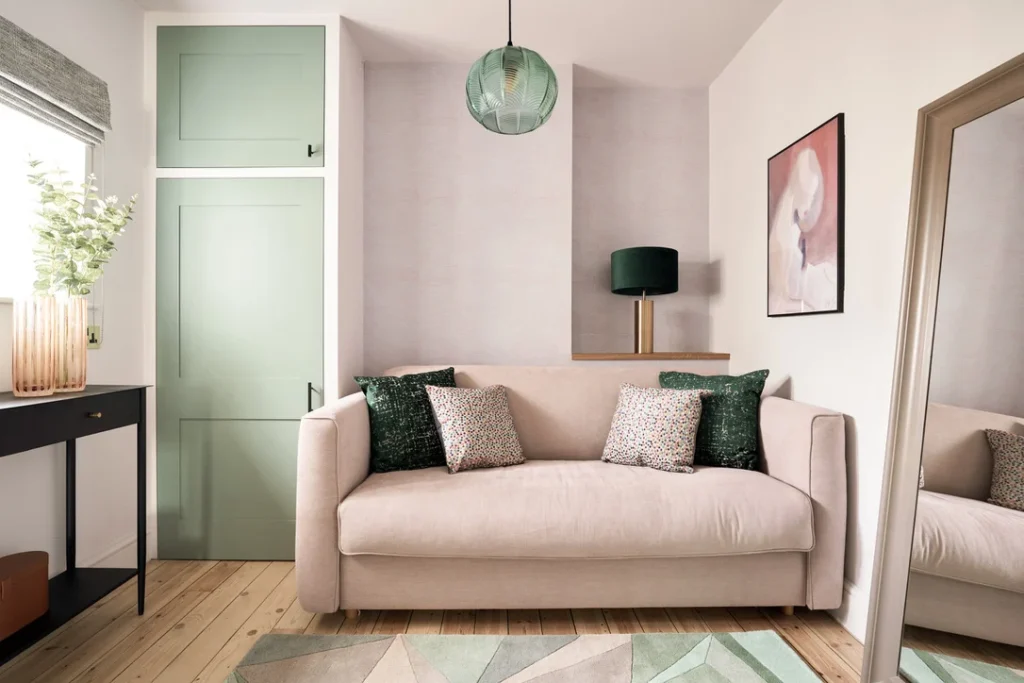
The government plans to replace the current open flame test with a smoulder-based standard, a shift expected to significantly reduce reliance on chemical flame retardants while maintaining fire safety. This better reflects how most domestic fires actually start, and under the new standard, manufacturers may no longer need chemical treatments to meet regulations at all.
The change is not yet law. Consultation is underway, and for now, most sofas in UK homes and showrooms still contain these chemicals. But the direction is clear, and it has been a long time coming.
The Case for Reupholstery
Before talking about buying new, it is worth considering what you might already have, or what you might find.
Vintage and antique furniture made before 1988 was built without chemical flame retardants. The frames are often better constructed, the proportions more resolved, and the materials more honest than much of what fills showrooms today. A mid-century armchair with good bones, stripped back and reupholstered in a natural fabric, is not just a more considered object. It is a healthier one too.
This is where someone like Sharon at Vintique Upholstery is genuinely invaluable. Sharon is a qualified upholsterer and resident expert on the BBC’s Money for Nothing, based in West Molesey and working with clients across Surrey and London. She has spent over a decade restoring furniture and has a very personal understanding of what FR-treated materials do. Years of working with chemically treated fabrics, foams and calicos have had a direct physical effect on her. She knows from her own experience, not just professional knowledge, that prolonged contact with these substances is not without consequence. That gives her a level of conviction about natural materials and honest construction that goes well beyond preference.
Sharon knows which pieces are worth restoring, what materials to use, and how to ensure the finished result is free from the substances that make so many new sofas a concern. And reupholstery done well is an investment in longevity. A piece restored using horsehair and natural linen, on a solid traditional frame, will outlast almost anything available in a contemporary furniture showroom. When it eventually looks tired again, you simply recover the top layer rather than replacing the whole thing.
If you have a piece you love, or have spotted something at auction that has the right structure, it is worth having that conversation before assuming you need to buy new.
If You Are Buying New
If reupholstery is not the right route, a small but growing number of makers have built their entire approach around producing furniture without chemical treatment.
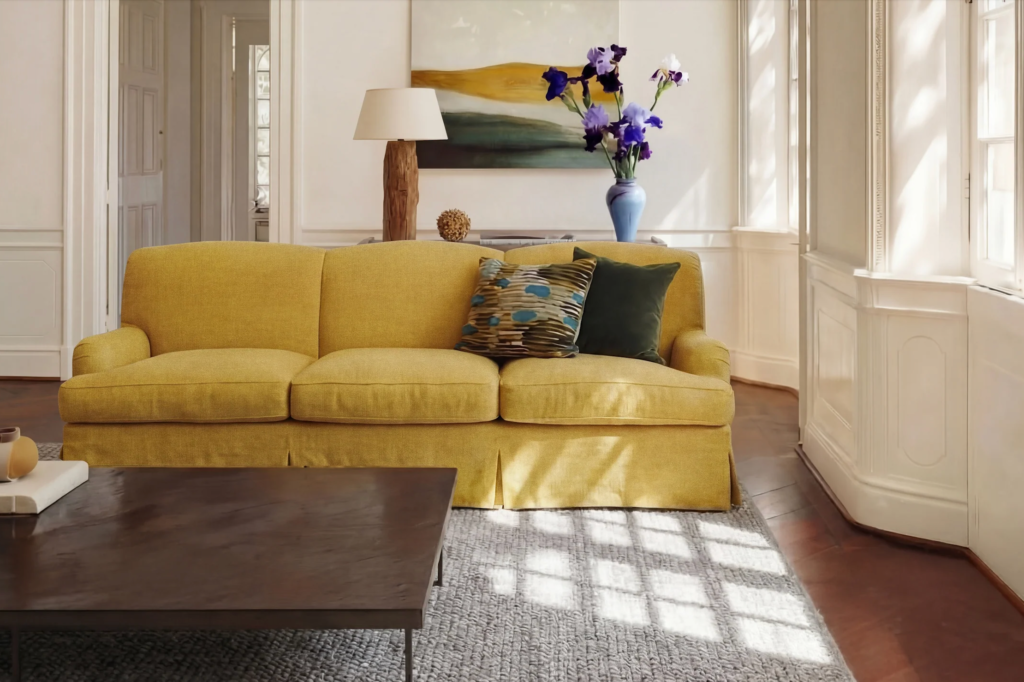
Schplendid is one we have visited and spent time with. Their sofas, as pictured above, use 100% natural materials: no chemical sprays, no polyester, nothing that does not occur in nature. The comfort is genuinely there, and the price point is more accessible than you might expect from a company working this way.
Slow Sofa takes a similar approach, handmade in the Yorkshire Dales using natural latex, wool, cotton and solid timber, with a lifetime guarantee on the frame. When the fabric eventually needs refreshing, they will recover it. That is how furniture used to work.
EcoSofa offers handcrafted pieces in natural fibre at a more accessible price point, working with FSC-certified timber and materials free from flame retardant chemicals.
And for those looking for something bespoke, Planted produces handmade furniture free from chemicals and flame retardant coatings, with a focus on craft and longevity.
None of these are household names yet. But the direction of travel is clear, and the regulatory change on its way will only accelerate things.
A Few Practical Notes
If you have existing sofas and are not at a replacement decision point, there are still things worth knowing.
Good ventilation matters. These chemicals escape into household dust, so a well-aired room and regular vacuuming with a HEPA filter will help reduce accumulation over time.
Even chemicals banned decades ago continue to be detected in household environments today, largely because they remain in older furniture still in use. If you have pieces that are very old or showing significant wear, that is worth factoring into your thinking.
Be particularly considered about children’s spaces. The research consistently points to young children as the most vulnerable, simply because of how much time they spend on and near soft furnishings. If you are furnishing a nursery or a playroom, prioritising natural materials from the outset is a straightforward decision.
If you want support thinking through materials and specification as part of a broader design project, a Colour and Style Consultation is a good place to begin that conversation.
Ready to Take the Next Steps?
This is a moment of genuine change in the industry, and it touches more than just the sofa you sit on. The materials inside our homes, beneath the surfaces we choose and the finishes we live with every day, matter. Understanding what they are made from, how they were treated, and how long they are designed to last is part of making a home that truly supports the people in it.
Whether you are approaching a full renovation, rethinking a room, or simply at a point where you want to make more considered choices, these questions are worth building into your thinking from the start. The best design decisions are made early, before money is spent and before things are fixed in place.
If you are beginning to think about a larger project, the Before You Build service is designed for exactly that stage. And if you would like to talk through how any of this applies to your home, get in touch to arrange a conversation.
Curious whether Kate Lovejoy Interiors is the right fit for your home? Discover more in our interview with the Society of British and International Interior Design.